
Adiantum capillus-veneris, Maidenhair Fern or Venus Hair Fern
This delicate, 12” high fern grows in moist shade throughout most of California and is native to many plant communities. It will go summer-dormant if allowed to dry out. It is tolerant of full shade, heavy soils, and poor drainage.
Wildlife value: Herbivores may eat the tender young fronds on occasion. As one of the first understory plant groups to revive with the fall rains, ferns offer important cover and structure for smaller animals.
Adiantum aleuticum, Five-fingered Fern
Once known as Adiantum pedatum, this fern grows in moist, shaded cliffs and canyon walls throughout the Redwood Mountain Range. From 8 to 30 inches tall, it is noted for its delicate foliage and ebony stems. It is attractive in a woodland garden setting with Iris, Violets, and Fringe Cups.
Wildlife value: Herbivores may eat the tender young fronds on occasion. As one of the first understory plant groups to revive with the fall rains, ferns offer important cover and structure for smaller animals.
Native American uses: The hard, beautifully polished stems of the Five-Fingered Fern attain a length of 1 or 2 feet in the Redwood belt near the coast. Native tribes used the black withes in some of their basketry and often wore them in hats. They also used this fern to prepare an ointment to relieve skin inflammation.
Other uses: Five-fingered Fern is used as a gentle medicinal for respiratory tract, hypoglycemic, and menstrual disorders. Tea made from the plant may be helpful for those bothered by smog or air pollution. The tea, whether used as an infusion or decoction, makes a body-giving hair rinse which, when mixed with Chamomile or Yarrow, also adds great luster to the hair.
Athyrium filix-femina, Lady Fern
This is an elegant fern native not just to California but to much of the Northern Hemisphere as well. It has a stout, above-ground rhizome that eventually forms a short trunk. Lacy apple-green fronds 3 to 6 feet long rise in symmetrical whorls in spring and summer. Lady Fern is winter-dormant. Plant it in shade in moist soil. This plant does well in containers and may re-spore into adjoining pots if conditions are favorable.
Wildlife value: Grizzly Bears, Roosevelt Elk, and deer eat the fronds.
Native American uses: Local tribes sometimes ate the fiddleheads.
Blechnum spicant, Deer Fern
Found in forests or in moist shaded areas near the coast, this small fern ranges from Santa Cruz north to Alaska and is also found in Europe. It reaches 18 inches tall and goes partially dormant in winter. Brilliant yellow-green new fronds emerge in spring. Plant it in partial shade and give it constant moisture until it is established, then give it only occasional deep watering. Deer Fern is nice beside a pond or stream.
Wildlife value: Many large hoofed browsers eat Deer Fern, a fact which probably accounts for the name.
Native American uses: The roots of Deer Fern were used for medicinal purposes.
Marsilea vestita, Water Fern
The Water Fern is a small perennial with slender rhizomes that creep along rooting in the mud. Although it is a true fern, it looks something like Oxalis. Reproduction is by spores, but the spores are not on the undersides of the leaves as with other ferns. Instead, they occur within hard round bean-shaped capsules at the base of the plant. It occurs natively on muddy banks, the edges of ponds, and vernal pools below 7,000 feet in coastal sage scrub and grassland communities from San Diego County north to British Columbia; it is also found in the Dakotas, Texas, Mexico, and Peru. In shallow water conditions, the leaves float on the water’s surface. Plant it in sun or shade in constantly wet conditions. This is a good pond plant which also does well in a container with a saucer of water underneath. If the plant dries out, all the leaves will die but new growth will emerge as soon as it receives water.
Polystichum munitum, Western Sword Fern
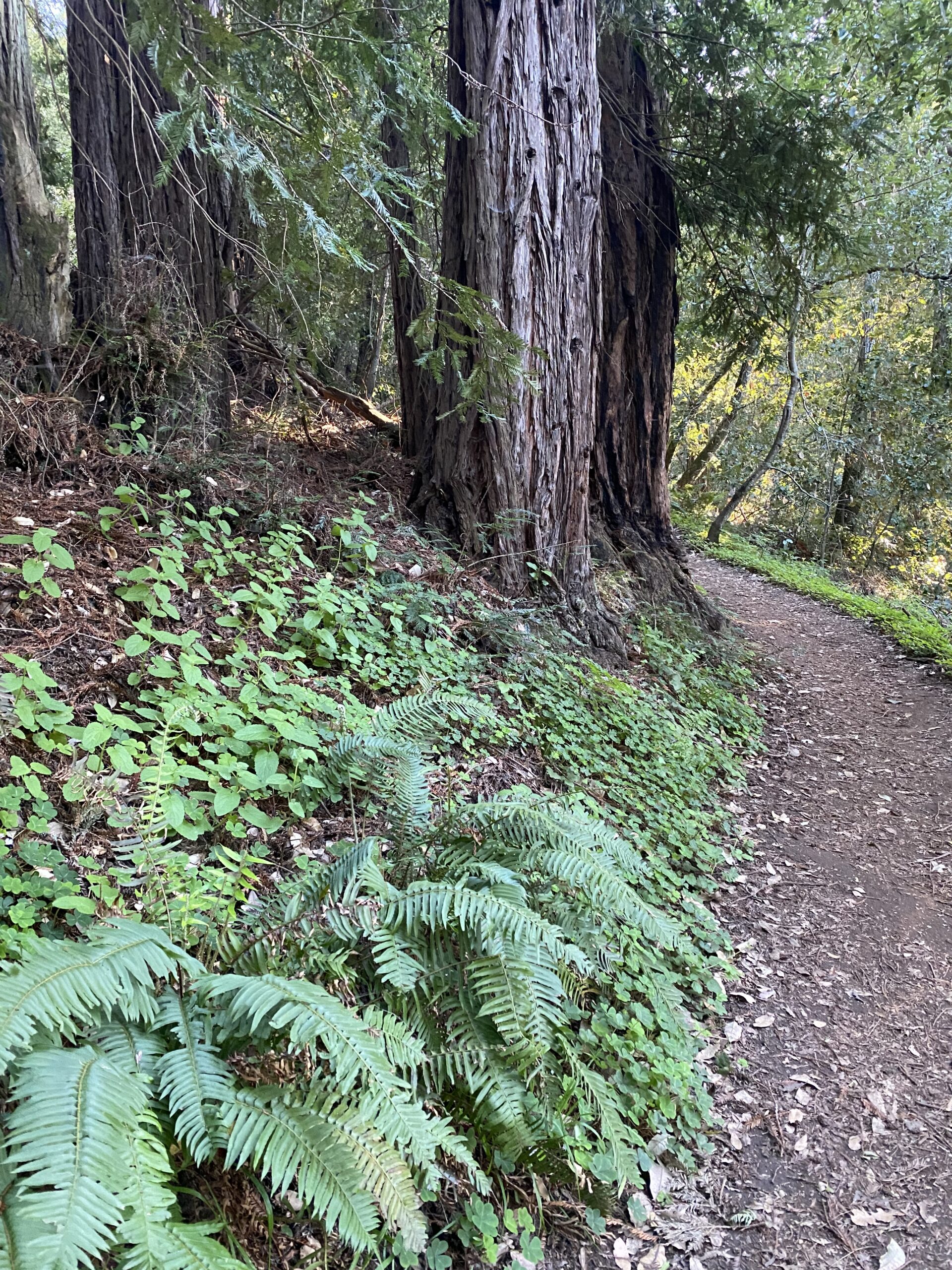
Found throughout California, Alaska, and Montana, this fern is common in moist locations throughout the Santa Cruz Mountains. It grows 2 to 4 feet tall and wide with dark green leathery fronds. It is tolerant of almost all levels of shade and needs moderate amounts of water. Plant it in soil with a high organic matter content for best results. Remove older fronds in order to maintain a tidy appearance since older plants may sport up to 100 fronds. It is a perfect companion in shady perennial borders.
Wildlife value: Western Sword Fern provides forage for elk, deer, and Black Bears.
Other uses: Florists use the fronds as greenery. Very young fronds are edible.
Woodwardia fimbriata, Giant Chain Fern
Giant Chain Fern is one of the easiest and most dependable native ferns in the garden. Tolerant of a myriad of conditions ranging from full shade to light sun, moist to minimal irrigation, and many soil types. It is large with fronds that can reach 6 feet in height and a strong upright or spreading silhouette. It’s natural habitat is moist shady locations, often along streams in woodland settings.