
Achillea species
Yarrows bloom abundantly throughout the summer and into early fall and require very little care.
Wildlife value: A myriad of insects, particularly beetles and butterflies, visit its flowers and foliage. This species is also a larval host for Painted Lady butterflies and an important food source for young Sage Grouse chicks.
Native American and other historical uses: A tea made from leaves and flowers was prized for treating consumption, stomachaches, headaches, toothaches, and sore eyes. Common Yarrow was so widely used during the Civil War to treat wounds that it came to be known as “Soldiers’ Woundwort”.
Other uses: An ethanol extracted from the leaves has mosquito-repellant properties. variant of our normally white native.
Achillea millefolium, Yarrow
Our native Yarrow, with its green, fern-like leaves, spreads as a groundcover if given water and will maintain a nice mound form with occasional pruning. The white pink flowers bloom on stalks which grow 2 to 3 feet high. Plant this perennial in full sun to light shade, and give it moderate water.
Achillea millefolium ‘Pink Island’
This is a pink variant of our normally white native from the Santa Barbara Botanic Garden. It forms broad mats of dark green leaves and bears continuous clusters of pink flowers from late spring to fall. The stems are up to 2 feet tall, making ‘Pink Island’ a good choice for cutting gardens.
Actaea rubra, Baneberry
This winter-deciduous perennial is found in woods and along streams. It has attractive foliage and small whitish flowers and bears shiny red berries in fall (these berries are poisonous). Baneberry grows 18 inches tall. Plant it in a shady spot and give it plenty of water.
Wildlife value: Several birds, including the Yellow-bellied Sapsucker, American Robin, Wood Thrush, Gray-cheeked Thrush, Brown Thrasher, Gray Catbird, and assorted grouse eat the fruits of Baneberry. Some small mammals also eat the berries, including Deer Mice, White-footed Mice, Red Squirrels, Eastern Chipmunks, and Redbacked Voles. While some birds eat the fruit but spit out the seeds, some small mammals extract the seeds and leave the pulp. Baneberry provides necessary cover for a variety of birds and animals.
Native American uses: The roots and leaves were used to make medicines for a wide variety of ailments. (These treatments were highly diluted due to the toxicity of this plant to humans and are not recommended for modern usage.)
Allium Species
The Allium species native to California all look, smell, and taste like the commercially grown Onion, Leek, Shallot, and Garlic bulbs which are their cousins. The main difference is that the wild plants are smaller than the ones grown as food crops.
Wildlife value: The flowers attract butterflies.
Allium dichlamydeum, Coastal Onion
A vigorous grower, this magenta-flowered Onion grows on coastal bluffs where it is exposed to windy, foggy conditions. Plant it in full sun along the coast or in partial shade inland. Keep it watered well during its growing season (fall through early summer). Reduce water after the foliage begins to turn yellow, and keep the surrounding soil dry until cool weather returns in the fall. Coastal Onion will tolerate some summer water, but it is better not to water it in hot weather. Give it well-drained soil in the garden or keep it in a container.
Allium unifolium, Meadow Onion
There are more than 50 species and subspecies of Allium native to California. They accept a wide range of conditions and have many different forms, flower colors, and bloom times. This one is one of the easiest native bulbs to grow and will reseed itself in a garden. It is native to streamside and summer-wet places up and down the coast. It reaches 1 to 2 feet tall, and clusters of light to bright pink flowers appear in May or June. Give it full sun and, if it is planted in an inland location, extra water during its growing season. Reduce water after the foliage begins to turn yellow, and keep the surrounding soil dry until cool weather returns in the fall. Meadow Onion tolerates heavy soil.
Ambrosia chamissonis, Beach Bur
Beach Bur is a very low-growing dune plant which grows along the coast. It has gray leaves and very tiny flowers which bloom in clusters throughout spring and summer. A sprawling habit makes it good for stabilizing sand dunes or loose soils. It has low water requirements and a high degree of salt tolerance. Beach Bur also has fire-retardant properties.
Anaphalis margaritacea , Pearly Everlasting
Pearly Everlasting is found throughout the northern states in full sun and fairly dry locations. It grows 1 to 3 feet high and has woolly, gray-green foliage. The flowers, which occur profusely, are quite charming and look like perfect miniature roses. They are ivory in color and often smell like maple syrup on hot days. The blossoms are very attractive combined with the lavender-blue flowers of Penstemon heterophyllos and make good dried flowers.
Wildlife value: Painted Lady butterflies visit this plant.
Anemopsis californica, Yerba Mansa
A small herbaceous plant which creeps along on red, vine-like rootstocks, Yerba Mansa reaches 6 to 12 inches high and has sunny white flowers with gold centers which sit upon stalks up to 2 feet high. This plant is of particular interest as it was once quite common in most of our creeks and springs and was used extensively for medicinal purposes by Native Americans. It dies back in winter and reappears in the spring. Plant it in full sun and give it some water (a sprinkler system is adequate).
Native American uses: The aromatic root, which has a strong peppery taste, is very astringent. It was made into a tea or a powder and applied to cuts and sores. A poultice was used to treat rheumatism, while wilted leaves were said to reduce swellings.
Angelica hendersonii, Coast Angelica
This is a spectacular Carrot relative found on coastal bluffs which is little used in the garden. It grows 3 to 5 feet high, and its dark green, leathery leaves are often more than a foot long. Sturdy flowering stalks send up dramatic, umbrella-shaped clusters of tiny greenish-white flowers in summer. The foliage has a pleasant smell. Plant it in full sun along the coast, and give it some summer water.
Wildlife value: Coast Angelica attracts a myriad of beneficial insects. It is a larval host for the Anise Swallowtail butterfly.
Angelica tomentosa, California Angelica
This Carrot relative may be found on brushy slopes. It grows 3 to 5 feet high and has gray-green leaves that are often more than a foot long. Umbrella-shaped clusters of tiny greenish-white flowers appear in summer. Plant it in full sun, and give it some summer water.
Wildlife value: California Angelica attracts a myriad of beneficial insects and butterflies.
Aquilegia eximia, Sticky Columbine
Often found on serpentine, this close relative of Aquilegia formosa is stouter and taller, often reaching 4 feet high. It has basal clusters of divided pale green leaves and stems covered with glandular hairs. Many graceful red and yellow flowers appear in summer.
Sticky Columbine is particularly nice next to a pond or in a woodland garden with ferns and grasses. It requires moisture and thrives in light shade. This plant is poisonous.
Wildlife value: Many birds eat the seeds, and hummingbirds and butterflies sip nectar from the flowers.
Aquilegia formosa, Western Columbine
Western Columbine grows throughout moist woods in sun to light shade. The foliage is light green, 1 to 3 feet tall and wide, and is praised by Sunset Western Garden Book as having a “fairylike, woodland quality with its lacy foliage and beautifully posed flowers.” The orange flowers with yellow centers nod on the ends of stout stalks. This woodland plant is best in filtered sun with some water. This plant is poisonous.
Wildlife value: Song Sparrows, Juncos, and other small birds relish the seeds, and Rufous, Anna’s, and Calliope Hummingbirds favor the nectar, as do butterflies.
Arabis blepharophylla, Coastal Rockcress
This perennial is uncommon in the wild where it is occasionally found clinging to rocky cliffs and slopes. In the garden, it makes a tidy cushion covered with magenta blossoms in early spring. Coastal Rockcress is suitable for rock gardens and containers. Remove old flower stalks to increase the blooming period. Plant it in well-drained soil in a sunny spot, and give it moderate amounts of water. This plant is at its best near the coast.
Wildlife value: This is a larval host plant for Sara Orange Tip, Large Marble, Common White, and Cabbage butterflies. Adult butterflies visit the flowers.
Aralia californica, California Spikenard or Elk Clover
Commonly found in moist, shady ravines throughout the Santa Cruz Mountains, Elk Clover’s large herbaceous leaves and thick, aromatic stems reach 5 to 8 feet high. Clusters of tiny white flowers occur on one stalk to form a single large “flower” about 1 foot across. The pungent odor of this plant is familiar to anyone who has hiked the local area. Large clusters of glossy purple berries hang decoratively from the plant in early fall. This dramatic plant and its tropical-looking foliage should be given plenty of room to show off. It is dormant in winter.
Wildlife value: Thrushes and other birds, as well as a few mammals (including the introduced Red Fox), eat the fleshy fruits.
Armeria maritima, Sea Thrift
This hardy evergreen perennial is commonly found along the coast. Its stiff, grass-like leaves make a tufted mound up to 1 foot high; small rose-pink flowers form tight balls on the top of stalks which grow 6 to 10 inches high. Sea Thrift blooms several times throughout the year. Plant it in full sun on the coast or light shade inland. It is at its best if given some water.
Wildlife value: Over-wintering Monarch butterflies sip nectar from Sea Thrift blossoms.
Artemisia pycnocephala, Sandhill Sage
Native to the beaches of northern California, this shrubby perennial forms a soft gray mound 1 to 2 feet tall and wide. This small gray shrub is a nice addition to a garden when perennials are done blooming because the foliage gives a tidy appearance. Remove the flower spikes to maintain the mound shape. Plant it in full sun and give it moderate amounts of water.
Wildlife value: Sandhill Sage is a good nectar source for butterflies.
Artemisia pycnocephala “David’s Choice”
This compact variety forms a soft, silvery-gray mound 1 foot tall and 3 feet wide.
Asarum caudatum, Wild Ginger
This creeping groundcover grows throughout the Coast Ranges in shady woodland areas. Its emerald green leaves are 3 to 5 inches long and form a dense carpet in moist, shady places. The leaves and roots are aromatic and emit a pleasant fragrance when crushed. Banana Slugs pollinate the bell-shaped, wine-colored flowers, which occur under the leaves and are therefore difficult to see. Good companion plants are Western Sword Fern, Fringe Cup, and Douglas Iris.
Wildlife value: Banana Slugs and ants visit this plant.
Native American uses: A tea made from the roots was sipped to ease stomach pains by some Native American groups.
Other uses: The whole plant has a strong smell of lemon-ginger when crushed. The roots can be eaten fresh or roasted or dried and ground as a tropical Ginger substitute. The plant also has antibiotic properties.
Asclepias fascicularis Narrow-leaf Milkweed
Milkweed grows on dry slopes and valleys throughout California. It has narrow gray- green leaves, reaches 2 to 3 feet tall, and offers clusters of ivory-pink flowers. It is dormant in fall and winter. Shortly after planting this in Los Altos Hills, we found it covered with caterpillars who ate it to the ground. We planted several more, worrying over the obvious shortage of this food source. All plants were quickly eaten to the ground. We assumed the plants were dead, but the following spring the hillside was covered with Milkweed.
Wildlife value: Milkweeds are the only suitable food for the caterpillars of the Monarch butterfly. Colorful beetles and aphids eat various parts of this plant (their bright colors are warnings to predators that they are poisonous). Many butterflies visit the flowers, as do spider-hunting wasps such as the large Tarantula Hawk.
Asclepias speciosa, Woolly Milkweed
Woolly Milkweed ranges from Sierra Nevada to Fresno County and grows in dry, gravelly places mostly below 6,000 feet. Its soft, woolly gray leaves form a plant 3 to 4 feet high; the plant is rather inconspicuous until it blooms. The flowers are quite stunning: The white flower clusters with magenta veins are about the size of a tennis ball and look as if they have been chiseled out of wax. This winter-dormant plant needs full sun, is drought-tolerant, and will spread.
Aster chilensis, California Aster
The lavender, daisy-like flowers of this perennial make showy, cheerful displays along the roadsides of much of coastal southern California each summer. It may be planted in either full sun or partial shade, and it will tolerate clay. This plant comes in dwarf (under 8 inches high) and tall (from 1 to 2 feet high) forms.
Wildlife value: This plant is a well-liked nectar source for our native moths and butterflies. It is an important late-blooming source of nectar. Field Crescent butterfly larvae eat the foliage. Quail, towhees, sparrows, and other ground-feeding birds eat the small seeds.
Astragalus nuttallii, Loco Weed or Balloon Plant or Rattle Weed
This small herb is a member of the Pea family. It is a common coastal species that produces clusters of large, inflated seed pods from 1.5 to 2 inches long which resemble
groups of small balloons. It has many (20 to 40) hairy, gray to dark green leaflets and abundant (20 to 90) greenish-white Vetch-like flowers with pale yellow-green calyxes. The ½-inch long flowers are clustered together in dense racemes from 3 to 6 inches long. Natively, this plant grows in sandy soils along the coast from San Francisco south. Plant it in full sun in well-drained soil; give it some supplemental water to keep it looking fresher.
Baileya multiradiata, Desert Marigold
This plant in the Sunflower family produces beautiful, clear yellow flowers which bloom atop soft white wooly foliage to create a wonderfully vibrant visual contrast. The plants bloom twice each year: once from April to July and again from October to November. Desert Marigold grows from 6 inches to 2 feet tall. It is native to the sandy and rocky slopes of the eastern Mojave Desert. Plant it in full sun in well-drained soil and give it little to no water once established.
Wildlife value: Desert Marigold attracts butterflies.
Brodiaea elegans, Harvest Brodiaea
This easy-care native bulb is found in grassland and open woodland communities and is the most common Brodiaea in California. Mounds of narrow leaves appear in late winter. In mid to late summer, after the leaves brown, flower buds swell to reveal delicate blueviolet to purple flowers on stalks up to 18 inches high. Flowers bloom a few at a time over a long period. Plant it in full sun, and do not give it any water in summer– cease watering completely once seed has set. Harvest Brodiaea is nice in a meadow of wildflowers and native bunchgrasses.
Calochortus albus, Fairy Lantern or Globe Lily
This is among the most beautiful of California’s flowers. It is often found growing in dappled shade along roadsides, and it is a member of several plant communities. The first leaf is large and strap-shaped; these leaves look like green tongues hanging down when the plants occur on steep embankments. Subsequent leaves are delicate and look like something out of a Japanese brush painting. The wax-like flowers are greenish or pinkish-white globes enclosing silky yellow hairs. Plant it in dappled shade and give it water from the first real cold snap in fall until it has finished blooming. After it has bloomed, give it absolutely NO water (if grown in a pot, move it into deeper shade).
Wildlife value: The flowers are pollinated by bumblebees.
Native American uses: Native Americans ate these very nutritious bulbs either raw or steamed.
Calochortus luteus, Gold Nuggets
Gold Nuggets is one of the easiest Calochortus to grow. It is found in coastal grasslands.
Yellow, tulip-shaped flowers which have fascinating red-brown markings inside bloom in June. The plant reaches 1 to 2 feet tall; it does best in open places with lots of sun and will accept heavy soil. Give it water from the first real cold snap in fall until it has finished blooming. After it has bloomed, give it absolutely NO water (if grown in a pot, move it into the shade).
Wildlife value: Bumblebees pollinate the flowers.
Native American uses: Native Americans ate these very nutritious bulbs either raw or steamed.
Camissonia cheiranthifolia, Beach Evening Primrose
This low, spreading perennial is native along the coastal strand from Baja California to southwestern Oregon. It grows initially as a rosette from a taproot and then sends its stems out in all directions to form a dense mat of light green-to-silvery foliage. Canary yellow flowers which turn red as they age bloom in great numbers from April through August. This plant’s ground-hugging habit makes it excellent for erosion control on the coast. It is drought-tolerant and will take salt spray. Inland, it males a good container plant. Good companion plants include Artemisia pycnocephala, Eriogonum latifolium, Eschscholzia californica var. maritima, and Fragaria chiloensis.
Cardamine californica, Milkmaids or Toothwort
One of the earliest bloomers in late winter, this delicate plant graces shady banks and roadsides in woodland settings and lighting up the late winter days with its cheerful, pinkish-white flowers. Plant it in a moist, shady spot. It will naturalize readily.
Chlorogalum pomeridianum, Soap Root
Often found in grassy meadows or rocky outcroppings, its wavy blue-green leaves are often inconspicuous until its flower stalks shoot 2 to 5 feet into the air. Delicate white flowers, described by Mary Elizabeth Parsons as looking as though “the truant summer wind had lodged a delicate white feather here and there upon the branches”, perch on the stalks. Really, though, the root is the most interesting part of the plant and the reason for its historical significance.
Wildlife value: Bees love Soap Root! It’s wonderful to hear the buzzing of bees visiting the flowers in the late afternoon on a summer’s day. The flowers also attract Sphinx Moths, butterflies, and pollinating wasps.
Native American uses: Native Americans made brushes from the root fibers, used the bulb for soap, lathered it in small pools to stun fish in order to catch them, and pounded it into a paste to make a salve to treat dermatitis caused by contact with Poison Oak. Other uses: Soap Root bulbs are not edible raw but may be eaten safely after being roasted or boiled. The bulbs also make a wonderful shampoo which removes dandruff and leaves the hair very soft and glossy.
Cirsium occidentale, Cobweb Thistle
This unusual-looking biennial grows in sandy areas along the coast. The foliage is covered with dense white woolly “cobwebbing” which contrasts beautifully with the many red, thistle-type flowers. Plant it in well-drained soil in full sun along the coast, and give it water occasionally. Keep foliage dry when watering.
Wildlife value: Thistles are the larval food plant of Mylitta Crescent and Painted Lady butterflies. The flowers attract many insects, and birds, especially goldfinches, eat the seeds. Cobweb Thistle is an extremely good source of nectar for hummingbirds.
Coreopsis gigantea, Sea Dahlia
This unusual-looking plant, which has been described as looking like a cross between a giant daisy and a palm tree, hugs the cliffs along the southern California coast. It is covered with yellow daisy-like flowers in spring. The plant will die back without water in the summer, leaving only the fleshy, twisted trunk exposed, then re-leaf and burst into bloom again with the winter rains. It has dissected leaves and grows 3 to 4 feet high and spreads to 2 feet wide. Plant it in full sun or partial shade. It is drought-tolerant.
Coreopsis maritima, Sea Dahlia
This Sea Dahlia is a beautiful, showy, short-lived perennial with a bold design. It has a stout, branching habit with willowy yellow daisy-like flowers borne on stems reaching 1 to 3 feet high. The flowers usually bloom from early spring through summer. Sea Dahlia grows natively on sea cliffs, coastal dunes, and strands from San Luis Obispo to Los Angeles Counties and the Channel Islands. Plant it in full sun in sandy or shallow soil and give it moderate amounts of water only until it is established. Sea Dahlia is wind- and drought-tolerant. Clip the flower stems to maintain a neater appearance.
Delphineum nudicaule, Scarlet Larkspur
A native perennial found throughout the Coast Ranges from San Luis Obispo to Oregon, it grows 1 to 2 feet tall and has bright green, deeply cleft leaves. The orange-red flowers are quite striking with their long spurs. This is a useful plant under Oaks as it prefers dry light shade to full sun. This plant is poisonous.
Wildlife value: The flowers attract hummingbirds.
Dicentra formosa, Western Bleeding Heart
This delicate-looking beauty has blue-green, fern-like, lacy foliage on 1 foot long fronds. Large plants can become bushy. The pinkish-purple, heart-shaped flowers droop in clusters from stems which grow 1 to 2 feet long. The flowers bloom from March through May. A rock garden plant that grows in damp places, it likes shade where it is hot and sun where the summers are cool. It is a perfect woodland companion with Fringe Cups, Wild Ginger, Meadow Rue, and Western Columbine.
Wildlife value: Western Bleeding Heart is a larval host plant for the rare and endangered Strohbeen’s Parnassian butterfly. Hummingbirds are very highly attracted to its flowers.
Dicentra formosa ‘Adrian Bloom’, Western Bleeding Heart
‘Adrian Bloom’ has lacy blue-green foliage 8 to 10 inches high; it bears pink heart-shaped flowers in spring. Western Bleeding Heart spreads freely by rhizomes and is dormant in winter. Plant it in rich soil in partial to full shade and give it supplemental water in the summer for best results.
Dichondra donneliana
This evergreen groundcover has distinctive leaves which look like tiny lilypads. It is a very low-growing perennial which is well-situated between stepping stones or tucked among rocks. Plant it in well-drained soil in sun or partial shade, and give it some moisture.
Dudleya caespitosa, Sea Lettuce
This succulent grows on rocks and cliffs in California and parts of the southwest. It forms a tight, ground-hugging rosette of gray-green, rather narrow leaves up to 8 inches long. In spring and summer, small yellow bell-shaped flowers appear on branched stems which grow 1 to 2 feet high. Plant it in a sunny, well-drained spot, and give it only occasional water once it is established.
Wildlife value: This plant attracts butterflies.
Dudleya cymosa, Live-Forever
This small, succulent perennial has thick blue-gray, teardrop-shaped leaves that grow in rosettes close to the ground. Its flowers rise on red-tinted stalks 4 to 6 inches above the rosette; they are bright orange or red, shaped like bird beaks, and occur form April to June. Plant it in a sunny, well-drained spot, and give it only occasional water once it is established.
Wildlife value: This plant is the larval host for the local and uncommon Sonoran Blue butterfly.
Dudleya cymosa ssp. cymosa
Found on sun-baked rocky outcrops in northern California, this succulent has striking bright red-orange flowers. Plant it in sun to partial shade; make sure that it has excellent drainage, and give it occasional water. It is great in containers.
Dudleya edulis, Ladyfingers
Ladyfingers grows 8 to 12 inches high and wide. Its white flowers bloom in summer. Plant it in full sun in well-drained soil; give it only occasional water. This plant is hardy to 10 degrees Fahrenheit. Dudleyas are great as container plants and in rock gardens.
Wildlife value: This plant attracts butterflies.
Dudleya farinosa, Bluff Lettuce
Found along California’s coastal cliffs and inland hills, this succulent forms a spreading rosette 1 foot high. It has lance-shaped green or gray leaves that are often tipped with red. In summer it sends up a candelabrum of small, waxy, star-shaped yellow flowers. Fairly drought-tolerant, it takes full sun on the coast and light shade inland. This is an incredibly easy plant to grow and is excellent in containers as it prefers little water and good drainage. It is a choice rock garden plant along with Sedum.
Wildlife value: This plant attracts butterflies.
Dudleya hassei
This native of Santa Catalina Island has short, closely branched trunks and densely clustered, narrow leaves which are covered with a white powder. Its nearly white flowers are borne on 8-to-12-inch stems in May and June. This plant makes an attractive smallscale groundcover. Plant it in full sun or partial shade; it is drought-tolerant.
Wildlife value: This plant attracts butterflies.
Dudleya palmeri
This Dudleya is found natively from California’s central coast down to Santa Barbara County. 15 to 25 leaves form a beautifully rounded rosette of foliage. Yellow flowers with red markings bloom atop loosely-branched stems. Grow this drought-tolerant plant in full sun to partial shade. It is excellent in containers.
Wildlife value: This plant attracts butterflies.
Epilobium species
California Fuchsia (formerly known as Zauschneria)
California Fuchsias were once known by the genus name Zauschneria, but they have been reclassified and now bear the name Epilobium. This is the same hummingbird magnet known and loved by millions, though— only the names have been changed to protect the botanists! This small shrub grows 1 to 3 feet tall and wide. Its soft gray foliage provides a stunning contrast to the bright red, tubular flowers which occur in late summer and early fall when most flowers are done. Although it often dies back in winter, its silver-gray foliage will reappear in the spring. Good on steep slopes and hillsides and found throughout California on dry, rocky slopes in full sun, its common companions are Monkeyflower, Coyote Brush, and California Sagebrush.
Wildlife value: Hummingbirds favor the flowers.
Epilobium canum
California Fuchsias (formerly of the genus Zauschneria) are fast-growing, semi-woody perennials which are found on rocky slopes and ridges, often along streams, in central and northern California. They vary widely in form, height, leaf texture, and flower size, shape, position, and color– they are a wonderful, easy-care plant for the native garden. In late summer through fall, they become very showy, erupting with many (usually) scarlet red blooms. Cut the plants back hard after they go dormant. Plant them in sun or partial shade, and do not give them any water after they become established. California Fuchsia is good planted under Oaks or as erosion control on sunny hillsides.
Wildlife value: The flowers are an important seasonal nectar source for hummingbirds.
California Dogface butterflies also visit the flowers.
Epilobium canum ‘Album’, White California Fuchsia
This is a spreading groundcover 1 foot high by 5 feet wide with gray-green leaves and tubular white flowers which is good for dry, shady places such as under Oaks. Prune it back hard when it goes dormant in winter.
Epilobium canum ‘Calistoga’
This selection is an improved variety from Epilobium canum. It is semi-trailing ad grows 12 to 18 inches high and 3 to 4 feet wide. Red-orange tubular flowers make a dazzling display summer through fall. ‘Calistoga’ grows best when planted in full sun in well-drained soil and given occasional water. Prune it back hard in late fall or early winter to encourage new growth. This plant is hardy to 0 degrees Fahrenheit. It is excellent for informal gardens, borders, and hillsides.
Epilobium canum ‘Carman’s Gray’
This perennial California Fuchsia grows to only 8 inches high. Its broad, bright gray leaves are accentuated by the orange-red tubular flowers which bloom summer through fall. Plant it in full sun in well-drained soil. No supplemental water is needed once the plant is established. Cut ‘Carman’s Gray’ back in spring to encourage a fuller habit.
Epilobium canum ‘Catalina’
This selection from Tree of Life Nursery was found in a deep canyon on Santa Catalina Island. It is shrubby in habit, growing 2 feet tall and spreading 6 feet wide. Narrow, silver-gray leaves densely clothe the plant, and brilliant wands of scarlet red flowers bloom in late summer.
Epilobium canum ‘Cloverdale’
This UCSC Arboretum selection has a low, mounding form and soft wide gray-green leaves. Massive displays of large orange-red flowers appear in late summer. Plant it in full sun, and give it occasional summer water. Cut it back hard after the plant goes dormant in late fall.
Epilobium canum ‘Silver Select’
This selection is remarkable for its silver– almost white– foliage. Semideciduous, this mounding plant will spread 2 to 6 feet. Scarlet-orange trumpet-shaped flowers appear in summer and fall and contrast beautifully with the foliage. Plant it in well-drained soil in full sun, and do not give it any water after it is established. Prune it in spring to shape.
Epilobium canum ‘Marin Pink’
This California Fuchsia has a loose, billowy look to it. It has pink-toned tubular flowers and silvery-green leaves. Prune it back hard when it goes dormant in winter. A bit invasive.
Epilobium canum ‘UC Hybrid’
This hybrid hails from the UC Botanic Garden in Berkeley. It was selected for the beautiful contrast between its gray-green foliage and scarlet flowers. Bushy in habit, it grows to 1 foot high. ‘UC Hybrid’ grows best in full sun, tolerates most soil types, needs little to no supplemental water once established, and is hardy to 10 degrees Fahrenheit.
Epilobium canum ‘Uvas Creek’
This hybrid from Santa Clara County was selected by Las Pilitas Nursery. It has wide, soft, gray-green foliage; bright red tubular flowers bloom in early fall. ‘Uvas Creek’ is drought-tolerant and grows best in full sun. Prune it back hard after blooming to encourage new growth.
Epilobium latifolium ‘Everett’s Choice’
Probably from the Sierra Nevada, this low, spreading form grows 8 inches high. It has wide, velvety gray-green leaves, and its large scarlet blossoms open in late summer and fall. It is drought-tolerant and does well in hotter inland locations, although it can be slow-growing. Cut the plant back hard when it goes dormant in late fall.
Epipactis gigantea, Stream Orchid
Stream Orchid is native from southern California to Washington. It is rarely available in nurseries and seldom seen in the wild. It grows 1 to 3 feet tall, has bright green leaves, and produces cream-colored flowers with purple veins in June and July. Although it usually grows near creeks or streams, it does well on a sprinkler system if given rich, moist soil in full sun to partial shade.
Wildlife value: Stream Orchid flowers are pollinated by Syrphid flies (beneficial flies which feed on aphids).
Native American uses: The tribes of northern California made a decoction of the fleshy roots for internal use when they felt “sick all over.”
Erigeron glaucus, Seaside Daisy
A prolific bloomer, this perennial is often found on bluffs overlooking the beach along the California and Oregon coasts. Light green basal leaves form a rosette topped spring through summer with an abundance of lavender daisy-like flowers. Plant this drought-tolerant native in full sun.
Wildlife value: This plant attracts butterflies.
Erigeron ‘Wayne Roderick’
This chance hybrid of Erigeron glaucus (above) and another, unknown, native species is like Erigeron glaucus but has longer leaves packed more densely in basal rosettes.
Several-branched flower stems rise in summer to display large lavender flowers with yellow centers. It appears to be more heat-tolerant than Erigeron glaucus.
Wildlife value: This plant is attractive to butterflies.
Eriogonum species
Wildlife value: Buckwheats are larval hosts to a number of butterflies and at times you can find colorful little caterpillars tucked into their flowers. The flowers provide food for the Dotted Blue, Blue Copper, Green Hairstreak, and Acmon Blue butterflies. The seeds are somewhat important for songbirds and small mammals.
Eriogonum grande x latifolium, Rosy Coastal Buckwheat
This hybrid cross combines the best of both worlds: a dense basal cluster of tomentose leaves with many large balls of lovely pink flowers held aloft. This plant makes a great addition to any garden. It grows 1 to 2 feet wide, and its flower spikes reach to 2 feet high. Rosy Coastal Buckwheat grows well on the coast and will take full sun; it is drought-tolerant once established.
Eriogonum nudum, Naked Stem Buckwheat
This is a small flowering perennial. The foliage grows approximately 6 inches high and wide, and the flowers, like small cotton balls, occur on taller “naked” stalks in late spring and early summer. This plant can be found in the most unlikely places— clinging to a rocky outcropping or growing from a crack in a boulder. The seed for this plant came from Mt. Hamilton, where it was found growing with Foothill Penstemon and California Sagebrush.
Eriogonum umbellatum, Sulfur Buckwheat
This Buckwheat may be found throughout Siskiyou, Placer, and Modoc Counties in dry, sunny locations. Its pale gray-green leaves form a small mound 12 to 36 inches high and wide. Large clusters of sulfur-gold flowers appear in July and August. The Sierras in mid-summer are a mass of color with the gold flowers of Sulfur Buckwheat.
Eriogonum umbellatum var. polyanthum ‘Shasta Sulfur’
This spectacular perennial from mountainous areas forms a gray-green mound 1 to 2 feet high and 3 feet wide. In spring it is covered with round sulfur-yellow flowers. Plant it in sun or partial shade. ‘Shasta Sulfur’ needs some summer water in inland areas.
Eriophyllum confertiflorum var. confertiflorum, Golden Yarrow
Found in many dry habitats and in our area on serpentine, this perennial has upright branches reaching 1 to 2 feet tall and wide with gray, woolly foliage and heads of small, yellow, daisy-like flowers in spring and summer. Plant it in full sun in a spot with good drainage.
Eriophyllum lanatum, Dwarf Woolly Sunflower
This spreading perennial can be found on coastal bluffs and shady banks from Monterey County to Del Norte County. Its gray woolly foliage grows 1 to 2 feet tall and wide, and it has yellow daisy-like flowers from April to July. It forms a nice mat which is attractive with Douglas Iris, Seaside Daisy, and Foothill Penstemon where its yellow flowers contrast nicely with their purple ones.
Eriophyllum stachaedifolium, Lizard Tail
This common plant grows along the coastal dunes and scrub from the Channel Islands on up to southern Oregon. It reaches 2 to 3 feet high and spreads as wide. Many small, yellow, daisy-like flowers appear in spring and summer, but it will bloom throughout the year. Plant it in a sunny spot in well-drained soil. It tolerates salt and wind and looks its best when given occasional summer water.
Erysimum capitatum, Foothill Wallflower
Native to the inland foothills from the Oak woodlands to the Yellow Pine forests, Foothill Wallflower is a short-lived perennial and is often biennial. Initially the foliage is a rosette of leaves, but as the flowering stalks emerge in late spring the leaves are carried aloft. The flowers range in color form yellow to orange and appear in tight racemes or panicles with a long succession of bloom. The stalks often bear buds at the top and flowers in the middle with seed pods below. Plant it in full sun in well-drained soil, and give it moderate amounts of water. Cut the stalks back after blooming unless you want to collect the seeds. Protect Foothill Wallflower from snails and slugs.
Erysimum concinnum, Pt. Reyes Wallflower
This plant is named for the Pt. Reyes area of Marin County where it may be found on coastal bluffs and sand dunes. The fragrant flower heads bloom from early to mid-spring and range from soft, creamy yellow to white. This perennial is easy to grow and is easily propagated from seeds collected in late spring. It reaches to about 1 foot high and has a very deep tap root which makes it drought-tolerant. Plant it in sun or light shade inland in well-drained soil; give it some supplemental water in summer. Cut the flower stalks back after seed collection. Protect young seedlings form slugs and snails. Pt. Reye Wallflower is a great plant for borders or used as a single specimen in rock gardens. Plant with Sea Thrift, Dudleyas, and Sedums for color and contrast.
Erysimum franciscanum, San Francisco Wallflower
This beautiful rare Wallflower is native to San Francisco and the coastal bluffs from Santa Cruz to Sonoma Counties. Sweetly fragrant, bright yellow, four-petaled flowers bloom in clusters atop 1 to 2 feet tall plants spring through summer. While many Wallflowers are biennial, this species is actually a perennial. This plant thrives in both sandy soil and in rocky places. It grows wild on dunes, coastal bluffs, and clear hillsides near the ocean and requires only moderate water in the garden.
Wildlife value: San Francisco Wallflower is the main food source for the endangered San Bruno Elfin butterfly.
Eschscholzia californica var. californica, California Poppy
While this is an annual, not a perennial, it is worth including as it is our beloved state flower. It was adopted by the California State Floral Society in a landslide election victory over Mariposa Lily on December 12, 1890. This is an orange-blooming, taller form than Coastal California Poppy (below). It has dissected, gray-green, succulent leaves, and its brilliant gold flowers with orange centers bloom throughout the year. It self-seeds readily. Broadcast seed in the fall or plant it in full sun, and give it occasional water.
Wildlife value: Many birds, especially quail, are attracted to Poppy seeds.
Eschscholzia californica var. maritima, Coastal California Poppy
This is the local coastal version of our beloved state flower, not the taller, bright-orange form found in “native” seed mixes. It has dissected, blue-gray, succulent leaves, and its brilliant yellow flowers with orange centers bloom throughout the year. It self-seeds readily. Plant it in full sun, and give it occasional water. This charmer is guaranteed to make you smile.
Euthamia occidentalis, Western Goldenrod
Western Goldenrod grows in moist meadow areas. Its stalks grow 2 to 3 feet tall and are topped with clusters of small gold flowers which wave gracefully in the breeze. Place it in full sun and give it some water. Note that this plant will spread wherever it finds moisture.
Wildlife value: Its fall flowers are a magnet for insects of all kinds, including many butterflies. The Coronis Fritillary may be found far from its native hillsides flying down watercourses from one Goldenrod plant to another.
Fragaria species
Wildlife value: Ground-feeding birds such as grouse, California Quail, Brewer’s, Blackbirds, Mountain Quail, California Towhees, Spotted Towhees, Northern Mockingbirds, Black-headed Grosbeaks, Northern Flickers, Yellow-breasted Chats, Pine Grosbeaks, and Cedar Waxwings eat the fruit. So, too, do small mammals like chipmunks, mice, and squirrels.
Other uses: The leaves, flowers, and fruits of California Wild Strawberry are all edible. The leaves may be steeped in water to make a tea.
Fragaria californica, California Wild Strawberry
This fast-spreading groundcover may be found throughout the Coast Ranges and foothills. It is a San Francisco Bay-area native. This beautiful species grows 6 to 8 inches tall; it has glaucous leaves ranging from green to red and charming flowers. It produces a small, sweet strawberry favored by wildlife. Plant it in full sun to light shade and give it moderate amounts of water. It is attractive cascading over walls.
Fragaria chiloensis, Beach Strawberry
Beach Strawberry is a spreading coastal perennial. It has shiny green leaves. The white flowers which bloom from March through August produce very small, red, edible berries. It naturally tolerates seaside conditions but will also do well inland if planted in partial shade and given some water
Fragaria vesca, Wood Strawberry
This widespread species is generally found in somewhat shaded areas. It grows 6 to 8 inches high and spreads vigorously. The small, sweet berries it produces are attractive to all. Plant it in full sun to light shade; giving it some water will result in a fast-spreading groundcover. Wood Strawberry is attractive cascading over walls.
Grindelia stricta, Gumplant
Gumplant makes an excellent compact, spreading groundcover along the coast. It produces dozens of sunny yellow, daisy-like flowers, and its medium-green, tough leaves stay compact. The flower buds are covered by a sticky white gum which lends the plant its common name. In the wild it flourishes everywhere from sandy, wind-swept spots to dense, heavy soils along highways. Plant it in full sun and give it some water.
Native American uses: A decoction of the whole plant was used as a blood purifier, to open the bowels, and to cure colds and colic. The fresh leaves were chewed and used as a substitute for tea.
Helianthemum scoparium, Rush Rose or Sun Rose
This small, deciduous subshrub of the Cistus (Rock-rose) family is native to coastal sage scrub, chaparral, and closed-cone pine forest plant communities. It grows 6 to 9 inches tall and has numerous green rush-like branches. Bright yellow flowers bloom in profusion from March to July, giving rise to the common names of Rush Rose and Sun Rose. Helianthemums are particularly abundant after a fire when they have little competition from taller shrubs. Grow it in full sun, and give it very little water once it is established. This plant will tolerate dry, compacted, sandy, or serpentine soils.
Heracleum lanatum, Cow Parsnip
Out of nearly 80 species worldwide, this is the only Cow Parsnip native to North America. It is a deciduous perennial which may grow from 4 to 10 feet high in a season. It has large leaves which range in size from 8 to 20 inches long and wide. Balls of flat-topped white flower umbels bloom from March through May. The flowers have an interesting, sweet fragrance which has been described as smelling like tortillas. Like all its carrot family cousins, it grows from a taproot or cluster of stout, fibrous roots. Although it grows best in moist, shaded areas, it can also be found in open woodlands and clearings. Cut it to the ground when the leaves begin to die back.
Wildlife value: Many types of browsers eat the foliage. Several species of bear seem to particularly enjoy Cow Parsnip. This plant attracts many beneficial insects and butterflies, particularly the Lorquin’s Admiral, and is a larval food plant of the Anise Swallowtail butterfly.
Native American uses: Many tribes used Cow Parsnip for nutritional and medicinal purposes. The insides of the stems were eaten raw or boiled to extract sugar. The leaves were also eaten. Apache in Arizona used the roots to treat epilepsy.
Heterotheca sessiliflora ssp. bolanderi ‘San Bruno Mountain’, Golden Aster
Formerly known as Chrysopsis villosa, this is a cheerful, mound-forming perennial which grows up to 8 inches tall. It has fuzzy green leaves, and many yellow, daisy-like flower blossoms open from summer through fall. Plant it in well-drained soil in full sun, and give it moderate amounts of water. Golden Aster is pretty tucked between rocks with Seaside Daisy, Sea Thrift, Buckwheat, and Sea Lettuce.
Heuchera species
Wildlife value: Hummingbirds favor the flowers.
Native American uses: Native peoples made a tonic from the boiled roots to treat general systemic debility. Root decoctions were used to reduce fevers, treat venereal disease and heart trouble, as an eye wash and to stop diarrhea. The leaves were often the first greens to be eaten, after being boiled or steamed, in spring.
Heuchera ‘Canyon Pink’
‘Canyon Pink’ is a hybrid between Heuchera sanguinea, the Coral Bells of Arizona, and some of our small mountain natives. It is evergreen, grows 1 foot high, and has bright pink, fragrant flowers with lighter centers. Plant it in light shade to full sun on the coast, and give it moderate amounts of water.
Heuchera maxima, Island Alum Root
The foliage of this plant forms a consistent dense groundcover of clumps 1 to 2 feet across with large heart-shaped, scalloped leaves. The small white flowers occur in clusters on stalks up to 2 feet high from February through April. Plant it in full shade and give it occasional water in the summer.
Heuchera micrantha, Alum Root
This dainty plant grows in the shady understory throughout California’s forests. Its scalloped leaves form a compact evergreen clump 8 to 10 inches high. Clusters of little white bell-shaped flowers appear on the ends of wiry reddish stems from April through August. It is very attractive in woodland gardens and perennial borders with Violets and Irises.
Heuchera micrantha ‘Martha Roderick’
Nevin Smith calls ‘Martha Roderick’ “a robust plant with typical bright green leaves and tall stems bearing hundreds of rose pink blossoms”. Plant it in shade and give it regular water.
Heuchera pilosissima, Shaggy Alumroot
This perennial is found on coastal bluffs and shaded slopes from San Luis Obispo County north to Mendocino County. It is similar to Heuchera micrantha (see above) but shorter and with larger flowers. Shaggy Alumroot grows 2 feet tall and wide and has pinkish flowers in late spring The entire plant is covered with shaggy white hairs, making it a very attractive plant for shady woodland gardens. It is also nice in rock gardens. Plant it in sun along the coast or in partial shade inland.
Hibiscus lasiocarpus, Rose Mallow
Now rare and endangered, this showy perennial was formerly found on wet banks and in marshes in the Sacramento and Central Valleys. It grows 3 to 4 feet high and bears large (4 to 6 inches across) white to rosy-pink flowers with wine-red centers in late summer. The attractive large heart-shaped leaves are winter-deciduous. Cutting the plant back in late spring results in a shorter plant and larger flowers. Plant it in full sun, and give it water. It is very cold hardy. This plant was once known as Hibiscus californicus.
Horkelia californica
This is a clumping perennial which grows to 18 inches high and which is found in grassy openings on the edges of coastal scrub. Small white flowers bloom on long stems in summer. This plant is most remarkable for its unusual piney aroma, which is particularly strong on hot summer days. Plant it in full sun to partial shade, and give it occasional water.
Horkelia marinensis, Point Reyes Horkelia
This rare plant may be found in sandy areas from Point Reyes to Santa Cruz. It has a low, matting form which grows up to 6 inches high and spreads widely. Small white flowers bloom from summer to fall. The entire plant has a distinctive piney aroma. Plant it in full sun, and give it occasional water.
Iris species
Native American uses: The leaf fibers of Irises are as strong as silk. Native peoples cleaned and wove these fibers into rope, a process which took about 6 weeks to produce a rope 12 feet long. The rope was exceedingly strong and pliable and especially valuable for making fish nets and snares for deer and other game.
Iris douglasiana, Douglas Iris or Mountain Iris
Our local Iris forms a graceful clump of evergreen leaves 1 to 2 feet tall with showy lavender, cream, or yellow flowers in early spring. It may be found throughout the California coast in mixed evergreen forests and open grasslands from Santa Barbara to Oregon. Plant it in full sun on the coast, light shade inland.
Iris douglasiana ‘Canyon Snow’
Dara Emery of Santa Barbara Botanic Garden selected this outstanding Douglas Iris. It has broad, exceptionally shiny leaves and branched stems of large, pure white blossoms with yellow markings. Plant it in reasonably well-drained soil in a sunny or partially shady location, and give it moderate to no water once it is established.
Iris fernaldii, Santa Cruz Mountain Iris
Found in shady places in the Middle Coast Ranges, this Iris has narrow, grayish-green leaves and creamy yellow flowers in springtime. It is drought-tolerant and well-suited to woodland gardens. Plant it in sun or shade.
Iris innominata, Del Norte Iris
Native to northern California and southern Oregon. It forms an evergreen clump of grass-like leaves. The flowers are borne on 8-to-12-inch stems and may be yellow, gold, orange, lavender, violet, or brown; they often have spectacular veining. Plant it in full sun to light shade, and protect it from extreme summer heat.
Iris longipetala, Long-petal Iris
This uncommon Iris is found in moist areas in grasslands from our area north to the North Coast Ranges. It has wide green leaves and many lilac-purple flowers. Use it around a pond or in meadows.
Iris macrosiphon, Ground Iris
This rugged native species has a deceptively delicate appearance. It forms neat, fountainlike clumps with narrow, arching bluish-green leaves. Graceful narrow-petaled white to deep violet blossoms decorate the plants in early and mid-spring. Plant it in sunny to lightly shaded places in well-drained soil; keep the plants fairly dry in summer.
Iris ‘Pacific Coast Hybrids’
Eleven species of Iris are native to California. Their habitats include Redwood forests, coastal plains, Oak woodlands, mixed forests, and mountain meadows. The native Iris are perennials, usually evergreen, and usually highly adaptable, taking anything from deep shade to light sun. The Pacific Coast Iris are hybridized from these native Iris parents. They range in color from butter yellow to velvet purple and bloom in early spring. The best growing conditions for these Iris hybrids are sunny to lightly shaded places with well-drained soil and moderate to scant water in summer.
Lathyrus littoralis, Silky Beach Pea
This beautiful perennial is found growing on coastal dunes in our area, but it ranges all the way to British Colombia. This plant has silky, silvery leaves; large pinkishpurple and white lupine-like flowers bloom in spring. Plant it in sandy soil in full sun along the coast.
Lilium Species
Wildlife value: The flowers attract Pale Swallowtails and other butterflies as well as Rufous, Anna’s, and Calliope Hummingbirds.
Uses: The bulbs and rootstocks of all Lilium species plants are edible, although some are tastier than others. The bulb scales of Humboldt Lily, for example, are very bitter.
Lilium humboldtii, Humboldt Lily
This Lily grows in open woodsy areas, often near seasonally moist places, in the lower Yellow Pine and upper chaparral belts of the Sierra Nevada and on the western slopes of southern California mountains. Its stout stem grows from 3 to 5 feet high and bears 4 to 6 whorls of slightly waxy leaves. The nodding flowers are 2 to 4 inches long and orange with small maroon or purple spots. The flower segments roll backward from the margins. Blooms occur from June to July. Allow the surrounding soil to dry out after this plant has finished blooming.
Lilium pardalinum, Leopard Lily
This beautiful Lily’s showy orange flowers with purple spots nod on the ends of 2 to 3 feet tall stalks from June to August. The leaves are narrow and pointed. Once common to moist, shady areas of the Redwood forest in the Santa Cruz Mountains, it was uprooted and taken home by so many people that it is now quite rare. Legend has it that the Leopard Lily was created by a Korean hermit who removed an arrow from a tiger. The two became friends, and when the tiger died the hermit transformed his body into a Tiger Lily to preserve their friendship. When the hermit later drowned, the Tiger Lily spread down the stream looking for his lost friend.
Lilium pardalinum ssp. pitkinense, Pitkin Marsh Lily
This endangered Leopard Lily grows only in the Pitkin Marsh in Sonoma County, with over-collection and habitat loss being the major causes of its endangerment. It is very similar to the species Leopard Lily, but it has more scattered leaves and redder flowers. Plant it in sun or partial shade near the coast or in partial shade inland, and give it regular water.
Lilium pardalinum ssp. wigginsii, Wiggin’s Lily
An uncommon Lily found in wet thickets, meadows, and streams in the conifer forests of the northwestern corner of California and southwest Oregon. The flowers are generally uniformly orange or yellow-orange. Part shade and regular water.
Lilium washingtonianum, Washington Lily
Washington Lily was reputedly named for Martha Washington. It is a dryland Lily which must have a dry period of several months in late summer (usually from July to November). It is native to California from the Sierra Nevada around Yosemite National Park north to Mount Shasta and from Humboldt County into Oregon along the Cascade Mountains as far north as Mount Hood. The stems grow 4 to 6 feet high. Trumpet-shaped white flowers bloom in August; they often become pink-tinged as they age and frequently have very small purple spots inside the trumpets. These flowers are very fragrant and smell like Pinks.
Limonium californicum, Sea Lavender or Statice
This plant grows throughout our coastal salt marshes. It forms a clump of leathery green leaves up to 1 foot high from which flower stalks shoot up to 2 feet tall. The tiny white to lavender, paper-like flowers bloom throughout spring and summer. Plant it in full sun on the coast and give it moderate water.
Linum lewisii var. lewisii, Blue Flax
This small lance-leaved perennial grows throughout the northern coastal ranges and the Sierra Nevada. It reaches 1 to 2 feet in height and is fairly drought-tolerant. The five-petaled flowers are a beautiful powder blue and occur in loose clusters. Plant it in full sun. Blue Flax is very pretty planted alongside Achillea ‘Heidi’ and Eyelash Grass.
Lobelia cardinalis, Cardinal Lobelia
This perennial grows naturally in moist areas in southern and southeastern California. It is an upright plant which reaches 2 to 4 feet in height. Bright red, tubular flowers bloom in summer. Plant it in full sun in a moist or boggy spot.
Wildlife value: Cardinal Lobelia is a favorite of hummingbirds.
Lobelia dunnii var. serrata
This perennial grows in wet spots along the southern California coast. Blue, Salvia-like flowers bloom spring through summer. The plant itself grows about 1 foot high. It works well as a small groundcover among rocks where it can find some moisture. Plant it in sun or light shade
Lotus formosissimus, Coast Trefoil
This low, sprawling perennial may be found infrequently in wet meadows, on shores, or along roadside ditches. It has aromatic pink and yellow Pea-like flowers. This plant is not to be confused with the invasive weed Lotus corniculatus which has all yellow flowers. Coast Trefoil may be interplanted with Deschampsia, Prunella, and Sisyrinchium.
Lotus scoparius, Deer Broom
This plant is common on the edges of chaparral and is often seen following a disturbance. It grows 2 feet tall and wide. Bright yellow flowers which fade to red-orange cover the plant from late spring to early summer. This nitrogen-fixing plant is good for erosion control. Plant it in full sun, and give it occasional to no water.
Wildlife value: Deer Broom is a larval food plant for Common Sulphur and Silvery Blue butterflies.
Lupinus species
Wildlife value: The hard, smooth seeds, which occur in pods like Peas, are a valuable food source for many upland gamebirds such as California Quail and Valley Quail. They are also eaten by Clark’s Nutcracker and California Ground Squirrels. Bumblebees and hummingbirds visit the flowers. Insects also eat the seeds.
Lupinus latifouus var. latifolius, Broadleaf Lupine
Found in moist areas and open woods, this perennial bears purple flowers in late spring. It is often seen growing with Monkeyflower on rocky outcrops. Plant it in sun to partial shade, and give it occasional water. Broadleaf Lupine is winter-deciduous.
Lupinus polyphyllus, Bog Lupine
Found in moist areas and bogs throughout California, this perennial is a parent of the Russell hybrids. Its flowers are blue to purple. Bog Lupine has huge, lush-looking leaves with flower stalks which grow up to 4 feet high. Plant it in full sun and give it plenty of water. It is deciduous in winter.
Lupinus variicolor, Varicolored Lupine
This multi-colored perennial bears white, yellow, rose, or purple flowers, often all on one plant. It is native to coastal terraces and beaches. The growth habit is somewhat spreading, reaching 2 to 4 feet high and wide. It is an excellent plant for coastal and container gardens mixed with other coastal plants.
Maianthemum dilatatum, False Lily-of-the-Valley
This is a woodland herb 6 to 14 inches high which may spread as a groundcover. It has shiny heart-shaped leaves, delicate racemes of tiny white flowers, and tan-red berries in midsummer. A rare plant in the wild and even rarer in nurseries, False Lily-of-the-Valley is found in moist places in Redwood and mixed evergreen forests along the north coast. It makes a beautiful addition to a woodland garden if given shade and some water.
Wildlife value: Gamebirds and small mammals will eat the berries to a limited extent.
Native American uses: Although they were not very highly regarded as food, Native Americans occasionally ate the berries. Green berries were collected and stored in water until they became red and soft, or the ripe berries were dried and boiled before being added to other berries (such as Salal) and made into cakes. Note that untreated berries are poisonous.
Other uses: The root may be pounded and soaked in water to make a topical disinfectant.
Mimulus Species
Wildlife value: Large and colorful hemipterans (insects with piercing and sucking mouthparts) may be found inside Mimulus flower tubes. Caterpillars of the Common Checkerspot and Buckeye butterflies eat the foliage, and adult butterflies sip nectar from the flowers. Hummingbirds favor the flowers, and other birds eat the seeds.
Other uses: Young Mimulus leaves may be eaten in salads (the older leaves may be eaten as well, but they grow bitter with age.)
Mimulus aurantiacus , Sticky Monkeyflower
Sticky Monkeyflower is commonly found throughout the San Francisco Bay area, often growing in full sun and dry rocky places. This small shrub grows up to 3 feet high and blooms continually through the summer with bright orange, yellow, or red tubular flowers. It does best with some water and a good pruning after it’s done flowering. It is attractive with Black Sage, Coffeeberry, and Penstemon.
Mimulus bifidus, Mock Azalea
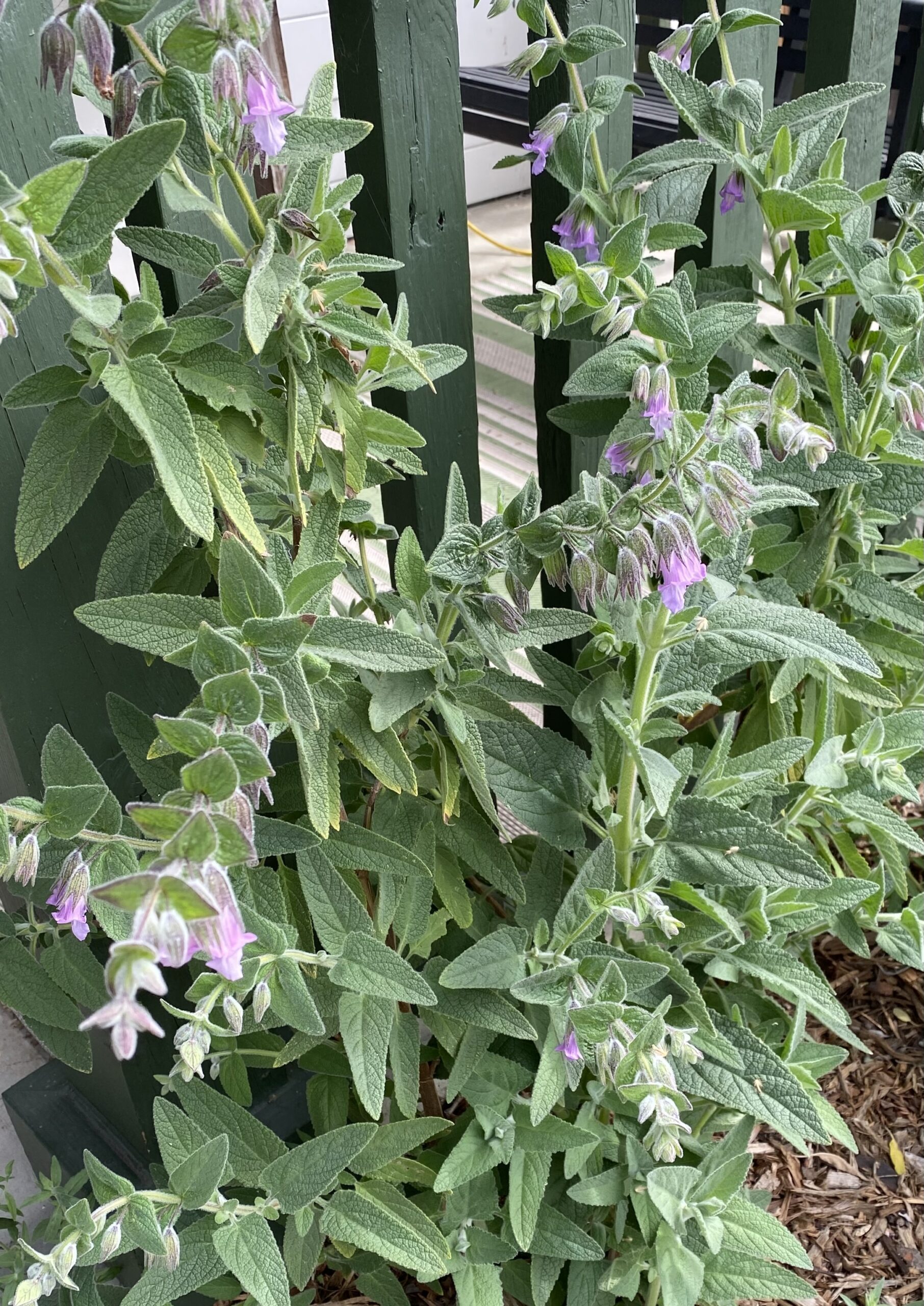
Mock Azalea likes full sun and dry, rocky soil. It is drought-tolerant, but water it occasionally for best results. The shrub grows about 3 feet high and has summer flowers which range in color from yellow to peach.
Mimulus cardinalis, Scarlet Monkeyflower
Scarlet Monkeyflower grows in moist places throughout California. It is 1 to 2 feet tall and wide and has light green foliage with bright orange flowers from July through October. Full sun and water produce an abundance of color in the garden.
Mimulus guttatus, Seep Monkeyflower
This is a very showy herbaceous perennial which goes dormant in winter and reappears in spring. Its light green, succulent foliage is topped by a mass of bright yellow tubular flowers from spring into summer. Plant it in full sun and, since it frequently grows along creeks and streams, give it water.
Mimulus lewisii, Pink Monkeyflower or Mountain Monkeyflower
This robust, spreading perennial grows along streambanks and in moist places in the Sierra Nevada and other mountainous locations. It has light green foliage and lavender to purple, often golden-throated, flowers. Plant it in full sun, and give it lots of moisture. Remove older flowering stalks to keep the plant tidy.
Mimulus longiflorus, Southern Monkeyflower
This Monkeyflower grows as a 3 feet by 3 feet mound of green foliage with yellow to orange flowers in spring and summer. It is drought-tolerant, but some water will extend its blooming period. Plant it in full sun or light shade.
Mimulus moschatus, Musk Monkeyflower
Musk Monkeyflower is named for the scent emitted by the hairs on its stem. It has deep yellow, tubular flowers from spring into summer. Its foliage is bright green and winter deciduous. Plant it in full sun and give it some water to extend its blooming period.
Mimulus puniceus, Red Monkeyflower
Although native to southern California, Red Monkeyflower is very similar to our local species in habit and appearance. This plant, however, has a profusion of deep scarlet-red flowers which often have gold centers. It grows 3 to 4 feet tall and wide and has narrow, dark green leaves. Plant it in full sun and give it moderate water. It will produce abundant new growth and flowers if pruned annually.
Monardella species
Wildlife value: This plant attracts hummingbirds, bees, and butterflies.
Native American uses: A tea made from the leaves is very minty and good for stomach disorders.
Monardella macrantha ssp. macrantha, Hummingbird Mint
This spectacular perennial lies flat to the ground and slowly spreads. Its large flower heads have gorgeous long, tubular red-orange blossoms. Plant this drought-tolerant beauty in a spot with perfect drainage in either sun or shade. Hummingbird Mint is good for rock gardens and in containers.
Monardella odoratissima, Mountain Pennyroyal
This small evergreen perennial has light green leaves which smell like mint. It grows 1 to 2 feet high and has 1-inch white flowers. Mountain Pennyroyal is native throughout the western United States, but it is happiest when it is growing at 2,000 feet or more in elevation. Plant it in partial shade in rich soil and give it moderate amounts of water.
Monardella purpurea
This small shrubby perennial grows 4 to 10 inches high and has a woody base and herbaceous foliage. Its small, shiny green leaves, which have a faintly minty scent, are accompanied by little roundish pink-purple flowers from July through September. Usually found in dry open spaces in northern California, this is a sweet little plant for a perennial border or rock garden. Plant it in full sun. It is drought-tolerant but moderate water is recommended.
Monardella villosa, Coyote Mint
Coyote Mint grows throughout California and is usually found in open sunny areas or on rocky outcroppings. It’s very aromatic, fuzzy green foliage forms a soft mound 1 to 2 feet high with purple flowers throughout spring and summer. Plant in reasonably welldraining soil and give it moderate amounts of water.
Monardella villosa var. franciscana
This beautiful variety grows in central and northern California. Nice tucked in and among rocks, it has a dense, mounding habit; wide, rounded, almost succulent-looking leaves; and fat heads of bright purple flowers in summer. It grows 1 foot high and 2 feet wide. Plant it in full sun to partial shade. It is drought-tolerant.
Monardella villosa var. obispoensis
Found in chaparral and Oak woodlands in the South Coast Ranges, this variety has fuzzy, oval leaves, lavender flowers, and a matting habit.
Oenothera hookeri, Evening Primrose
A native California biennial found throughout the Coast Ranges from San Luis Obispo County to Trinity County, this stout, erect plant grows 3 to 4 feet tall and wide and is abundantly covered with large, yellow, saucer-like flowers from June through September. It is easy to grow if given sun and some water. Evening Primrose makes a good full color border with Monkeyflower, Penstemon, and Blue-eyed Grass.
Wildlife value: It is said that the flowers of this plant glow in the dark, which may by why the nocturnal Long-tongued Hummingbird Moth is attracted to it.
Oxalis oregana, Redwood Sorrel
Native to coastal forests from California to Washington, the creeping roots of this Oxalis send up velvety green clover-like leaves 8 to 10 inches tall. It has white flowers in spring. It is an excellent groundcover for part to deep shade and is good in combination with Fringe Cups, Leopard Lilies, Iris, and Redwood Violets.
Wildlife value: Songbirds such as Juncos and Sparrows occasionally eat the succulent leaves and minute seeds. Deer nibble the foliage.
Penstemon species
Wildlife value: Penstemon flowers are excellent nectar sources for hummingbirds. The flowers are also visited by native bees. Some insects eat the seeds.
Penstemon centranthifolius, Scarlet Bugler
Found in hot, dry chaparral or Oak woodlands in the South Coast Ranges and further south, Scarlet Bugler grows 2 to 4 feet high and has a twining habit. Its leaves are leathery and blue-green; a soaring flower stalk with many showy flame red trumpet-shaped flowers appears in summer. Plant this drought-tolerant Penstemon in well-drained soil in full sun.
Penstemon heterophyllus, Foothill Penstemon
Under 1 foot high with slender green leaves and striking blue-violet flowers, Foothill Penstemon is native to dry, sunny slopes from Humboldt County to San Diego County. It blooms abundantly through spring and summer. Common companion plants are Sticky Monkeyflower, California Fuchsia, and Wild Buckwheat.
Penstemon heterophyllus ‘Margarita BOP’
This selection comes from Las Pilitas Nursery, a marvelous native plant nursery in Santa Margarita. (BOP stands for “back of porch”.) It grows 2 feet tall, has bright green leaves, and bears bright blue flowers. Plant this disease-resistant Penstemon in well-drained soil in full sun, and give it little to no water after it becomes established in the garden.
Penstemon labrosus
This evergreen perennial grows on fairly dry slopes at 5,000 to 10,000 feet from Ventura County to San Diego County. Its leathery dark green foliage grows 1 to 2 feet high. The bright red tubular blooms appear on flower spikes which reach 2 feet high. Plant it in full sun and do not over-water– this drought-tolerant perennial will die young if given too much moisture.
Penstemon newberryi, Mountain Pride
This mat-forming Penstemon may be found growing on rocky outcrops at mid to high elevations. Rose-purple flowers cover the plant in summer, creating a marvelous spectacle in the wild. Mountain Pride combines nicely with Sulfur Buckwheat. Plant it in a sunny spot with excellent drainage; give it only minimal water after it is established.
Phacelia species
Wildlife value: Phacelia flowers attract native bees and other beneficial insects
Phacelia bolanderi, Bolander’s Phacelia
This perennial groundcover reaches 18 inches tall and keeps spreading. Purplish-blue flowers appear in late spring. It is useful for dry-shade situations, such as under Oaks. It will reseed in the garden. Plant it in full sun to partial shade along the coast and give it water occasionally.
Phacelia californica, California Phacelia
This plant grows in many-stemmed clusters which reach 1 to 3 feet high. It has dark green to silvery leaves which are both crinkled and fuzzy. The flowers, comparable to small, dark blue, hairy caterpillars, grow in coiled clusters on the ends of the stems and unfurl as they open. They bloom March through May. Plant it in open areas or rocky places and give it occasional water.
Potentilla species
Potentilla anserina ssp. pacifica, Silverweed
Found in wetlands along the coast, this plant spreads vigorously by red runners. The leaves are bright green above and silver-white beneath, thus the common name. Bright yellow flowers bloom in summer. Silverweed is good planted in a meadow or around a pond. It will grow in sun or shade and tolerate alkaline soil.
Potentilla glandulosa, Sticky Cinquefoil
Common in many habitats throughout California, this low-growing tufted Rose relative has leaves covered with glandular hairs and small, white flowers on long stalks. It is drought-tolerant; plant it in sun or partial shade.
Potentilla gracilis var. fastigata, Cinquefoil
Found in open forests and dry meadows, this perennial grows 2 feet high. Large yellow flowers held above the shiny, dark-green foliage cover the plant in late summer. The name Cinquefoil comes from the French expression for “five leaves or leaflets”. Plant it in sun or partial shade and give it moderate amounts of water.
Prunella vulgaris var. lanceolata, Self-heal
Found in moist areas in woodlands and grasslands, this perennial member of the Mint family slowly spreads to create large colonies. Violet flowers bloom throughout the year. It is attractive planted near ponds and in moist meadows; good companion plants include Hair Grass, Blue-eyed Grass, and Buttercup. Plant it in a moist spot in full sun or partial shade.
Uses: Self-heal is a traditional remedy used to relieve throat pain, reduce fevers, and accelerate the healing of wounds.
Ranunculus californicus, Buttercup
Found in grasslands, Oak woodlands, and forests throughout California, Buttercup’s shiny yellow flowers are one of the harbingers of spring. Best planted in masses, they grow up to 12 inches high and will reseed freely. Buttercups are good companions for Self-heal, Hair Grass, and Blue-eyed Grass. Plant it in sun or shade, and give it moderate amounts of water to keep it green.
Rudbeckia californica, California Coneflower
Found in mid-elevation mountain meadows, this perennial has wide green leaves. Its bright yellow flowers bloom in fall. It is at its best planted in partial shade and given summer water.
Wildlife value: Because they bloom when little else is in flower, Rudbeckias are attractive to butterflies.
Satureja douglasii, Yerba Buena
A spreading evergreen groundcover 3 to 6 inches tall with bright green, wavy leaves and tiny white flowers in spring. It is native from Los Angeles County to British Columbia, prefers shaded areas, and is often found by its fragrance– one may smell its strongly minty scent before one sees it. Its leaves make a delicious mint tea. Once so common in this area that the city now known as San Francisco was originally named in its honor.
Native American uses: Yerba Buena was eagerly sought by California tribes to make a tea which relieved stomachache and colic and “purified the blood”.
Satureja mimuloides
This slender-stemmed perennial herb has soft, hairy foliage and spreads quickly. It forms a small shrub 2.5 to 4.5 feet high and puts forth orange-red flowers June through October. It grows throughout the Coast Ranges and does best if planted in light shade to full sun and given moderate water.
Scrophularia californica, Bee Plant
This perennial has dark green, triangular, and coarsely-toothed leaves on squarish red stems. It grows 3 to 6 feet tall. The flowers are very interesting. They occur in small dark red clusters on the tops of the stems and have upper petals which are longer than their lower counterparts. Blooms appear from March through July. Plant it in sun to light shade in a relatively moist location.
Wildlife value: Bee Plant attracts hummingbirds, butterflies, and, yes, bees!
Sedum oreganum , Stonecrop
A succulent perennial groundcover 3 to 6 inches tall. Its fleshy leaves are usually a green-gold color but they turn red in cold weather. The flowers are small, yellow, and star-like and bloom spring through summer. It will grow in full sun to part shade and is drought-tolerant. This plant is native to California’s Coast Ranges and Sierra Nevada north to British Columbia. It is excellent in a container along with Dudleyas or small Manzanitas.
Wildlife value: Bees and butterflies visit Sedum flowers.
Sedum spathulifolium ‘Purpureum’
Found growing on rocky outcrops from southern California north to British Columbia. This selection has large leaves heavily tinged with purple and small yellow star-like flowers from spring through summer. Plant it in full sun to partial shade. It is drought-tolerant and good in containers or tucked in crevices among boulders.
Wildlife value: Bees and butterflies visit Sedum flowers.
Sidalcia species
Wildlife value: At least 15 different species of bees in the San Francisco Bay area use Sidalcea to provision their nests. Checkerbloom is also a larval food plant for Common Checkered Skipper, American Painted Lady, and West Coast Lady butterflies.
Sidalcea calycosa ssp. rhizomata
An uncommon perennial found in marshes near the coast in Mendocino, Sonoma, and Marin Counties. It grows 6 inches high and slowly spreads to 2 feet wide. It has shiny dark green leaves; deep rose-pink flowers bloom in summer.
Sidalcea hickmanii, Checkerbloom
This Checkerbloom grows primarily in the central coastal counties of California. It is a low, spreading perennial with gray foliage and 1-inch pink flowers. This plant becomes dormant in summer, but with a little water it will remain green and continue to bloom. Full sun.
Sidalcea malvaeflora, Checkerbloom
A low, sprawling perennial 1 to 2 feet tall which is found throughout California, usually in full sun in moist, meadow-like places. It has attractive foliage with rounded, scalloped leaves and hot pink to rose-colored flowers like miniature hollyhocks. Plants will bloom all summer with water; without it, they will go dormant and reappear in spring.
Sisyrinchium species
Wildlife value: The Mountain Quail of the Pacific Region feeds primarily on seeds, including those of Blue-eyed Grass, Lupine, Oak, Ceanothus, and Fiddleneck.
Sisyrinchium bellum, Blue-eyed Grass
This native California perennial grows on sunny grassy slopes or in meadows. A member of the Iris family, it forms a clump 8 to 10 inches tall similar to that of its cousin. Blueeyed Grass puts forth flowers ranging from all shades of blue to dark purple from early spring into summer. All the flowers have yellow centers. It makes a stunning combination with California Poppies and native bunchgrasses.
Sisyrinchium bellum ‘Arroyo de la Cruz’
This Blue-eyed Grass was selected by Brett Hall, Manager of the UCSC Arboretum, from the richly diverse area of Arroyo de la Cruz on the Hearst Ranch. It has exceptionally large, dark flowers.
Sisyrinchium bellum Nanum’
This Blue-eyed Grass has shorter, thicker leaves than the species plant and pale blue flowers the color of faded jeans.
Sisyrinchium californicum, Yellow-eyed Grass
Found in moist places near the coast from Monterey County northward, the grass-like leaves of this plant form small clumps like Iris up to 1 foot tall. Bright yellow flowers cover the plant through spring and summer. It is excellent on the edge of a lawn or in a flower border that will receive water (it must have moisture). The foliage dies back in fall and can be removed.
Solanum umbelliferum, Blue Witch
Blue Witch grows in full sun and well-draining soil and forms a small, mounding shrub 2 to 4 feet tall and wide. Its attractive purple flowers bloom from spring into early summer. It makes a good companion for other drought-tolerant perennials such as Monkeyflower and Blue-eyed Grass. This plant is poisonous.
Wildlife value: Numerous songbirds, including the Green-backed Goldfinch, California Mockingbird, Hooded Oriole, and Phainopepla, relish the blue-black berries.
Solanum umbelliferum var. incanum ‘Indians Gray’
This Nevin Smith selection from the Santa Lucia Mountains forms a compact, mounding shrub. It has beautiful gray stems, contrasting blue-green leaves, and lavender flowers borne in small clusters.
Stachys bullata, Hedge Nettle
This small 12 to 30 inches high bush has foliage covered with soft hairs and produces small tubular purple flowers from April to September. It occurs in dry canyons throughout the chaparral and coastal sage scrub. Annual pruning after it finishes flowering will keep it compact.
Wildlife value: Butterflies and other nectar-seekers visit this plant.
Other uses: An infusion of the fresh leaves may be used to wash sores and wounds.
Stachys chamissonis, Coast Hedge Nettle
Found in wet, swampy areas near the coast from northern California south to the central coast, this striking member of the Mint family can reach 6 feet or more high. Spreading from underground roots, it can quickly colonize a moist area in your garden. Large heads of magenta flowers bloom from May through October. Plant it in full sun and give it water.
Wildlife value: Coast Hedge Nettle is a good hummingbird plant.
Stanleya pinnata, Prince’s Plume
A desert perennial in the Mustard family, Prince’s Plume has a graceful form. It can reach 5 feet high or more and has yellow flowers on towering stems reminiscent of Cleome. It needs lots of heat, full sun, and excellent drainage. Give it occasional water in summer after establishment.
Wildlife value: Butterflies visit this plant.
Uses: The presence of Prince’s Plume reportedly indicates that the soil upon which it grows is rich in selenium. The leaves may be cooked and eaten like greens.
Tellima grandiflora, Fringe Cups
Found in moist woods and brush-covered slopes, Fringe Cups’ scallop-edged leaves form a compact evergreen clump 1 foot tall and wide. Its pinkish-white flowers appear on stalks which rise 8 to 10 inches high. Best as a foliage plant in a woodland garden, it needs shade and some water. Periodically remove any brown or mildewed leaves.
Wildlife value: Hummingbirds and other nectar-seekers visit the flowers.
Tiarella trifoliata var. unifoliata
This perennial groundcover produces leaves which sprout directly from its rhizomes, so it makes a nice, low clump in shady woodland gardens. The evergreen leaves are deep green and may be either heart-shaped or have three rounded lobes. Its thin flowers stalks rise up to 12 inches high and bear many small clusters of white flowers. Small white fruits follow the flowers; they are said to resemble sugar scoops.
Thalictrum fendleri var. polycarpum, Meadow Rue
Related to Columbine, this exquisitely delicate perennial with a lacy, fernlike look is grown mainly for its beautiful foliage. Greenish-purple, fringe-like blossoms appear on 2 feet tall, branched stems in spring (male and female flowers are on separate plants). Plant it in light to medium shade and give it regular water. Meadow Rue is winter-deciduous. It is also poisonous.
Tolmeia menziesii, Piggy-back Plant
A cute evergreen perennial with one small hairy leaf “piggy-backing” on top of another. A beautiful addition to the woodland garden, it forms a small mound 1 foot high and spreads as a groundcover in moist, shady places.
Trifolium wormskioldii, Cow Clover
Cow Clover grows primarily in moist places. It spreads by rhizomes and makes an effective low groundcover. It has white flowers tinged with purple that grow in dense round balls on upright stems. The flowers bloom from May through October.
Wildlife value: Legume-feeding butterflies visit the foliage. Bees and other nectar seekers visit the flowers.
Triteleia ixioides ssp. ixioides, Coast Pretty Face
This delicate bulb is often found growing in cheerful masses in coastal grasslands. Yellow, star-shaped flowers appear on 12” stems and have a green midrib on each petal. Plant it in full sun on the coast or in partial shade inland. Keep the plant well-watered during its growing season (fall through spring). Reduce water alter the foliage begins to turn yellow, and keep the surrounding soil dry until cool weather returns in the fall (it will take some summer water, but it is better left unwatered). Coast Pretty Face benefits from a protective mulch in hot summer weather.
Triteleia laxa, Ithuriel’s Spear
This common bulb comes in a wide variety of forms and is found in a wide variety of habitats. It likes sunny conditions and will multiply rapidly. Ithuriel’s Spear is one of the easier native bulbs to grow. It forms several long, narrow spear-like leaves with clusters of blue-violet funnel-shaped flowers appearing on stalks 8 to 24 inches high from April to June. It will take summer water and tolerates heavy soils. It is best planted in masses.
Vancouveria hexandra, Inside-out Flower
This creeping perennial is native to coastal forests. It grows 6 to 12 inches tall and has delicate, light green leaves. Stalks of tiny white flowers rise from the plant from late spring into summer. It spreads slowly. Plant it in light to deep shade. It makes a good groundcover under Redwoods. This plant is drought-tolerant.
Vancouveria planipetala, Inside-out Flower
This little evergreen perennial is very similar to Vancouveria hexandra (above). It has white flowers which look like drawn arrows on tiny bows. This is a good plant for dry, shady areas such as under Redwoods.
Verbena lilacina
Prolific lavender flowers that almost never stop blooming. This semi-deciduous, mounding perennial from Baja California, grows 18 inches high and spreads to 2 feet wide to create a low mound. Plant it in sun or partial shade and give it water occasionally.
Wildlife value: Insects, including American Lady and Western Coast Lady butterflies, visit the flowers.
Viola adunca, Dog Violet
Dog Violets grow in open fields and hillsides on the western slopes of the Santa Cruz Mountains. This spreading groundcover grows 3 to 6 inches high and has flower stems which are longer than its leaves. It produces a profusion of dainty violet to reddish-purple flowers several times a year. The flower petals are about one-half inch long. This plant takes full sun or light shade and is best with some water.
Wildlife value: Dog Violets are a larval host for Fritillaries. Gamebirds such as quail and doves and small mammals such as mice eat the seeds.
Other uses: Leaves of all of the native Violets may be boiled as greens or dried and used as tea. They are rich in Vitamin C.
Viola ocellata, Two-eyed Violet or Western Heart’s Ease
Found in shady coastal forests, this charming Violet has bright green, heart-shaped leaves and delicate flowers with the lower three petals being white and the upper two white on the inside and purple on the outside. The two purple spots on the lower leaves give the plant its common name. It dies back in late summer to its fleshy roots; the roots will rot if the plant receives too much water.
Wildlife value: The purple veins and spots on petals serve to attract bees to the nectar at the base of each petal. Butterflies also visit the flowers.
Viola sempervirens, Redwood Violet
Another charming Violet, this one is a low-growing denizen of the Redwood Forest where it is often found spreading widely across moist embankments. Its yellow flowers bloom throughout summer. Plant it in a shady spot in rich, well-drained soil.
Whipplea modesta, Modesty or Yerba de Selva
This creeping perennial is found on forested slopes throughout the Coast Ranges. It bears numerous tiny white flowers from May through July. It looks nice cascading over rocky banks or as a groundcover in woodland gardens. Plant it in shade and give it some water for best results.
Yucca whipplei, Our Lord’s Candle
This spectacular native can be a dangerous neighbor, particularly for small children, and is best placed on banks and walls away from traffic areas. Its crowns are made of stout, viciously pointed pale green to silvery-gray leaves up to 2 feet long. A stalk resembling a giant asparagus spear will rise as high as 10 feet from the crown after several years. This flower stalk then puts forth a show of large white bell-shaped flowers. This stunning plant blooms only once before the crown dies. Plant it in full sun; it is very drought tolerant.
Wildlife value: Several small birds and animals eat the flowers and fruits.
Native American uses: Ropes, nets, and baskets were woven from the leaf fibers. The seeds were pounded into flour. Very young flower stalks were roasted and eaten (they reportedly taste like baked apples).